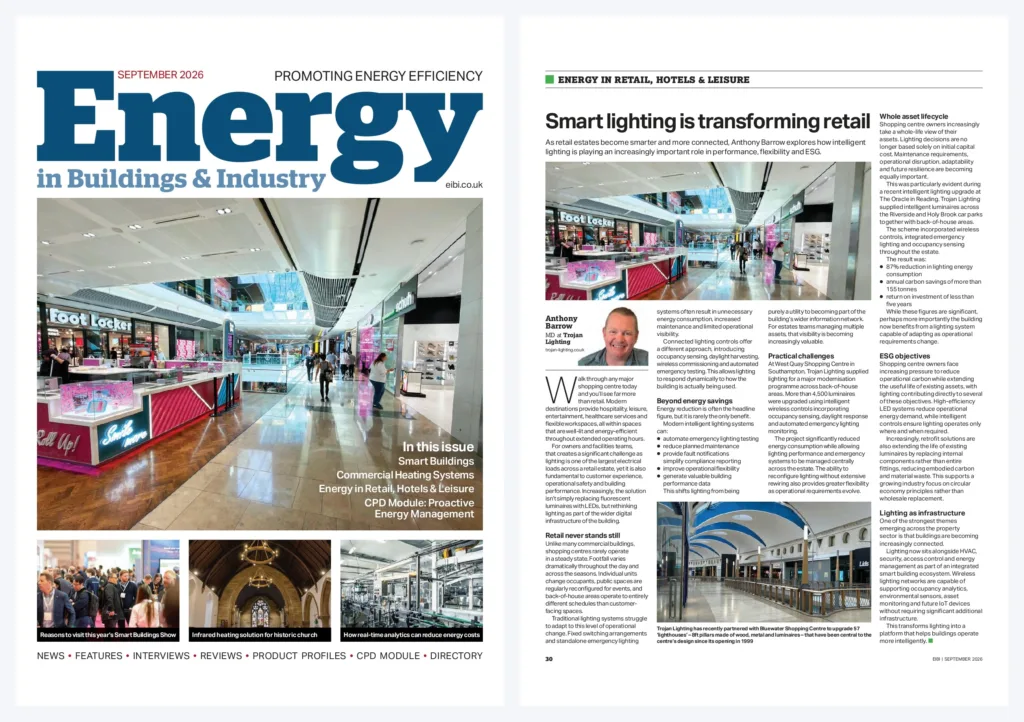
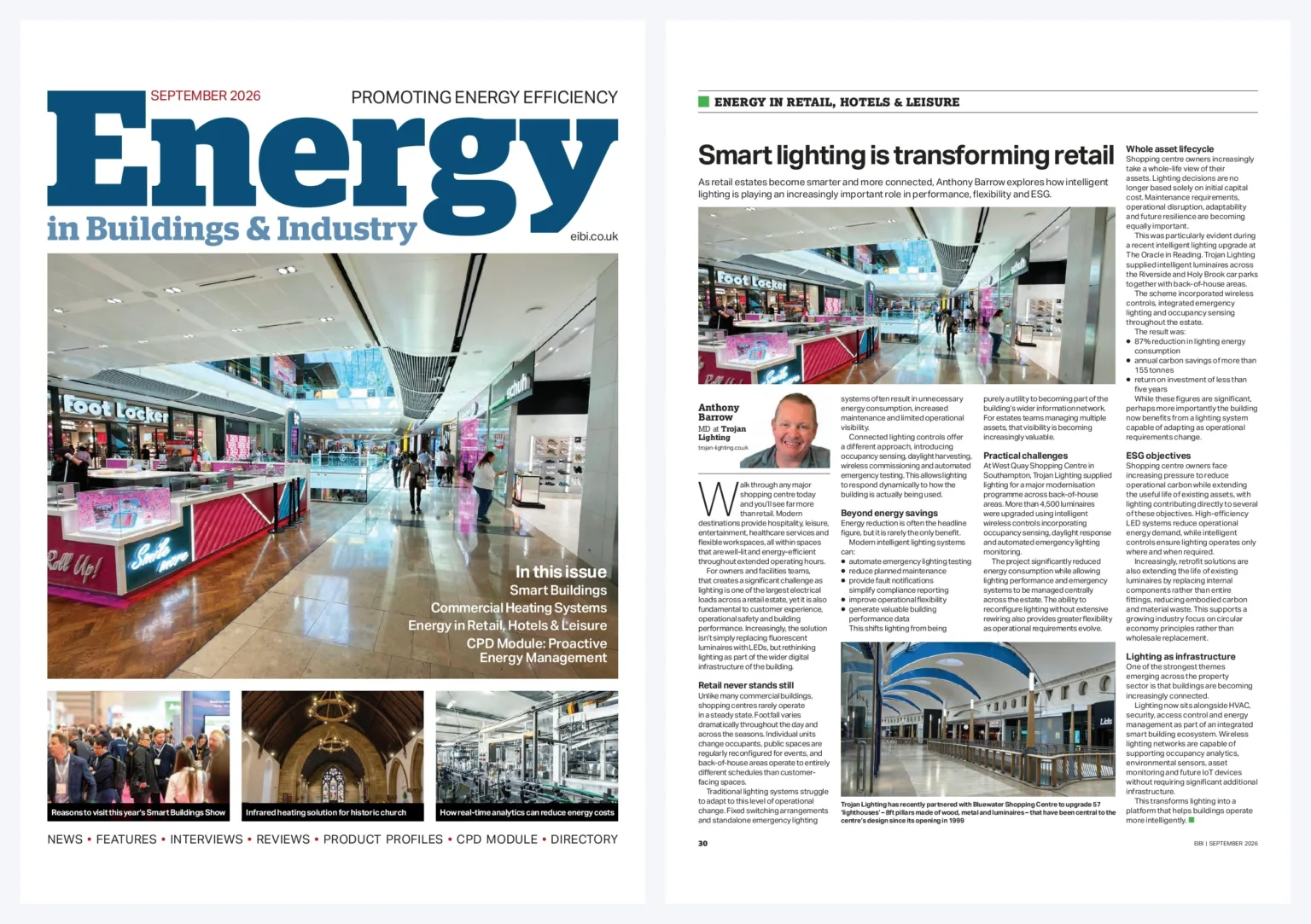
Anthony Barrow, Managing Director of Trojan Lighting, has written a feature for the September issue of Energy in Buildings & Industry (EiBI) on how intelligent lighting is changing retail estates. The article, “Smart Lighting Is Transforming Retail”, appears in the magazine’s Energy in Retail, Hotels & Leisure section.
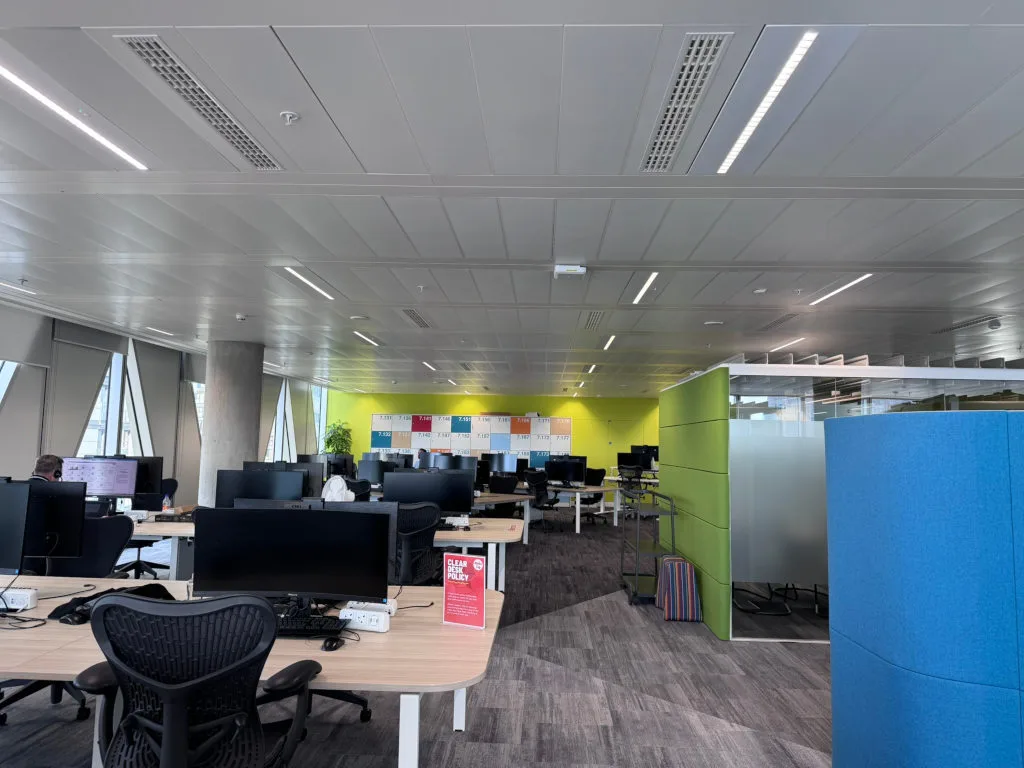
Anthony’s starting point is that shopping centres rarely operate in a steady state. Footfall changes through the day and across the seasons, units change occupants, public spaces are reconfigured for events and back of house areas run to entirely different schedules from customer-facing ones. Fixed switching and standalone emergency lighting struggle to keep up, which often means unnecessary energy use, more maintenance and limited visibility for estates teams. Connected controls take a different approach, using occupancy sensing, daylight harvesting and automated emergency testing so that lighting responds to how the building is actually being used.
The benefits go beyond the energy figures. Intelligent systems can automate emergency lighting testing, reduce planned maintenance, provide fault notifications, simplify compliance reporting and generate building performance data. For estates teams managing multiple assets, that visibility turns lighting from a utility into part of the building’s wider information network.
The article draws on recent projects. At The Oracle in Reading, intelligent luminaires with wireless controls, integrated emergency lighting and occupancy sensing were installed across the Riverside and Holy Brook car parks and the back of house areas. The result was an 87% reduction in lighting energy consumption, annual carbon savings of more than 155 tonnes and a return on investment of less than five years. At West Quay in Southampton, more than 4,500 luminaires were upgraded with wireless controls, so lighting performance and emergency systems can now be managed centrally across the estate and reconfigured without extensive rewiring.
Anthony also looks at the ESG pressures facing shopping centre owners. Retrofit solutions can extend the life of existing luminaires by replacing internal components rather than whole fittings, which reduces embodied carbon and material waste. Trojan Lighting is applying the same thinking at Bluewater Shopping Centre, where it is upgrading 57 “lighthouses”, the 8ft pillars of wood, metal and luminaires that have been central to the centre’s design since it opened in 1999.
The article closes on lighting as infrastructure. It now sits alongside HVAC, security, access control and energy management in the smart building, and wireless lighting networks can support occupancy analytics, environmental sensors, asset monitoring and future IoT devices without significant additional infrastructure.