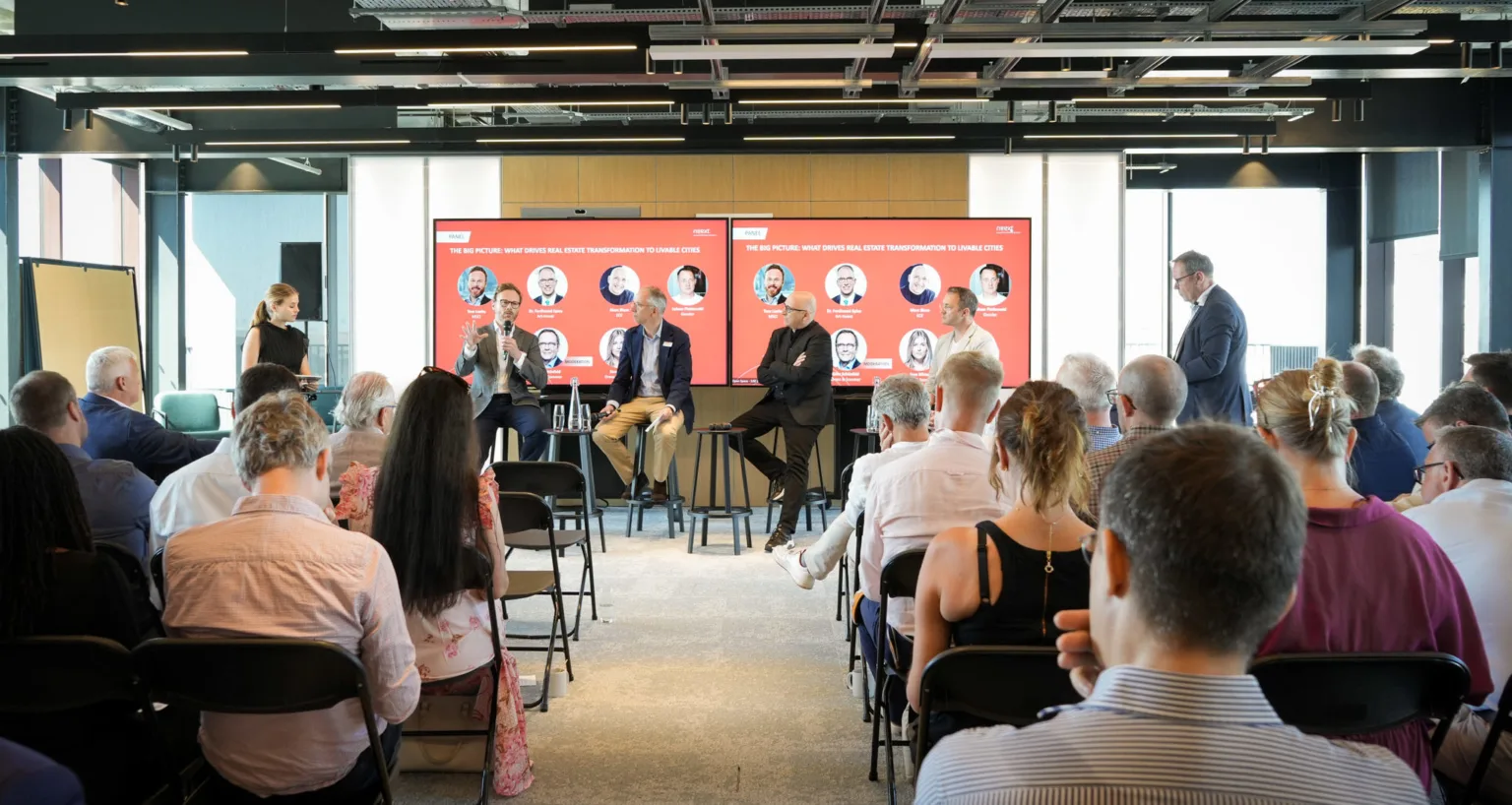
We were proud to take part in the neext Real Estate Forum: Building Bridges – From Assets to Cities: Rethinking Urban Transformation Across Europe, held in London and organised by Drees & Sommer.
The two-day event brought together leading organisations from across Europe to discuss how collaboration between industry, technology, real estate and the public sector can help create more sustainable, resilient and connected cities.
A particular highlight for us was hosting one of the forum’s guided project visits at Evelina London Children’s Hospital, where delegates experienced first-hand how intelligent lighting can contribute to the operation of modern healthcare environments.
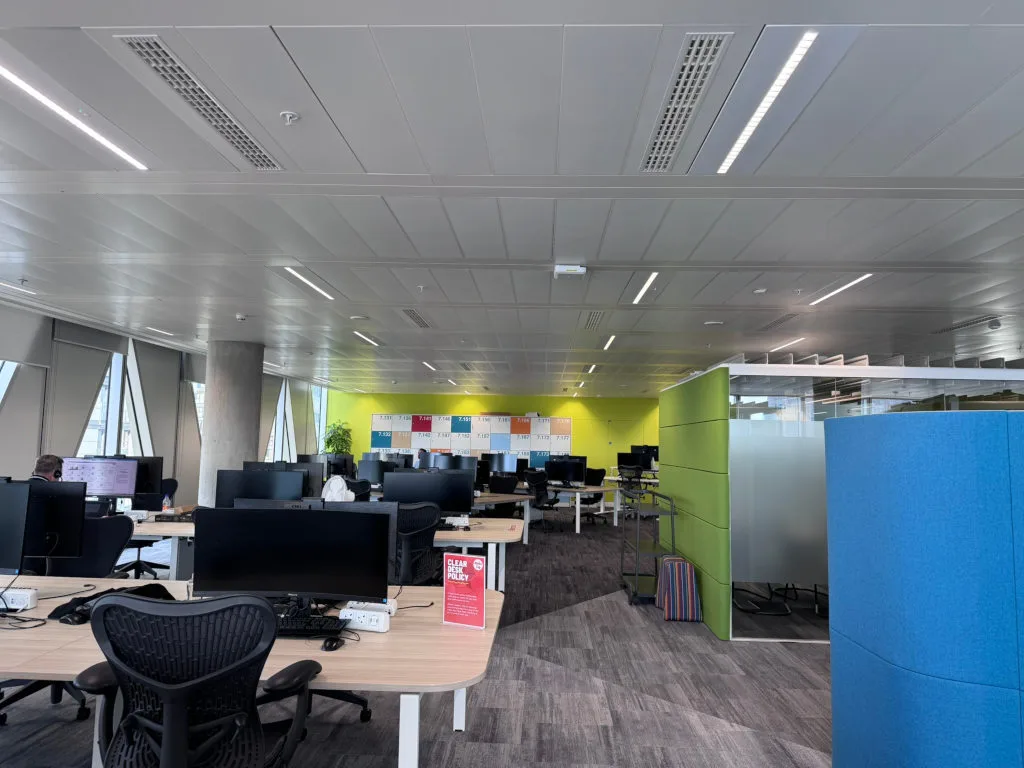
The project demonstrated how connected lighting extends far beyond energy efficiency. Through intelligent controls, automated emergency lighting testing and adaptable lighting strategies, the installation supports facilities teams with compliance and maintenance while creating a more responsive environment for patients, visitors and clinical staff.
The forum reinforced several important themes that closely align with our own approach to intelligent lighting.
Throughout the discussions, speakers emphasised that while the technology to transform buildings already exists, the greatest challenges lie in collaboration, early decision-making and the willingness to deliver change. Delegates also explored the importance of designing buildings and cities that prioritise long-term resilience, adaptability and quality of life, with infrastructure recognised as the foundation that enables smarter, more sustainable places.
These conversations mirror the direction of modern lighting. Increasingly, lighting is becoming part of a building’s wider digital infrastructure, providing valuable operational data, supporting energy optimisation, simplifying compliance and helping estates teams manage buildings more effectively.
Anthony Barrow, Managing Director of Trojan Lighting, said:
“It was a privilege to welcome delegates from across Europe to one of our healthcare projects and demonstrate how intelligent lighting can support the day-to-day operation of a building. The discussions over the two days highlighted the importance of looking beyond individual technologies and focusing on how different systems work together to improve buildings, infrastructure and ultimately the experience of the people using them.”
The forum also included a guided visit to Dockside Canada Water, alongside presentations and panel discussions featuring representatives from organisations including New London Architecture, Gensler, Woods Bagot, MSCI, ECE Group, Art-Invest Real Estate, Schindler Group and the AIT Austrian Institute of Technology.
As a member of the neext Network, we look forward to continuing to work alongside organisations across Europe to explore how intelligent lighting and connected building technologies can contribute to the future of the built environment.